
Last Updated 08/23/2026
Kellogg’s chemicals in US cereals have raised important questions about cereal ingredients, food additives, and the differences consumers may encounter between products sold in the United States and other markets. The controversy has placed renewed attention on what goes into familiar breakfast foods and how manufacturers make decisions about ingredients, formulation, labeling, and consumer expectations. For families who regularly purchase cereals, understanding Kellogg’s ingredients is more than just a matter of preference – it is part of becoming more informed about foods served at the breakfast table. The questions surrounding chemicals in cereals also extend beyond one company, creating a larger conversation about food additives and chemicals used through the processed foods industry.

What can consumers and food producers take away from the situation? The issue provides an opportunity to look more carefully at ingredient labels, manufacturing practices, regulatory differences, and the growing demand for greater transparency in food production. Chemicals in processed foods have become an increasingly important topic as people seek to understand what they are eating and why certain ingredients are included. This article examines the Kellogg’s controversy, the broader concerns surrounding cereal ingredients and food additives, and the key takeaways that other food producers should consider as consumers become more attentive to the products they purchase and feed their families.
W.K. Kellogg’s Under Fire For Chemicals in US Cereals, Key Takeaways for Other Producers
27-Sep-2024 By Gill Hyslop
A follow up on the Bakery and Snacks article “W.K. Kellogg’s Under Fire For Chemicals in US Cereals: Key Takeaways For Other Producers.” Reporting how Kellogg’s received backlash for adding chemicals in their US cereals, pressure is still on. What can the bakery and snack producers take away from this? BakeryAndSnaacks.com
Source and Permission Notice: This article references reporting originally published by Bakery & Snacks concerning W.K. Kellogg’s and chemicals in US cereals. Certain referenced material and imagery are used with permission to our Online Community group, which I and 4k78.com are part of. The views, commentary, and analysis presented on this page are those of 4k78.com unless otherwise attributed.
VIEW THE FULL SUMMARY HERE
=======================================================
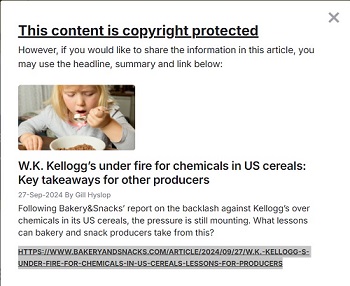
To the left side is the Kellogg’s Under Fire article we are making reference to. You can locate the details below to follow on what we have to say. We are sharing this here with you with permission granted from Bakery and Snacks. After reading this article it is quite natural that many consumers may be very angry about this information and may show concerns, raising many questions about the effects it may have on our children and grandchildren. This is simply appalling. How dare they?
Kellogg’s has faced criticism from food activists and consumers over the use of certain artificial colors and preservatives in some US cereals. With so many things to be worried about let alone this, it tells me they are heartless and cold blooded. I grew up on Kellogg’s cereals. And later in life as an adult, my daughter grew up on Kellogg’s cereals. The question that most likely comes to mind is: How long has this been going on???
W.K. Kellogg’s Under Fire for Chemicals in US Cereals: Key Takeaways for Other Producers. So, we are going to give our takeaway from this as we carry on with our article below.
Why Kellogg’s Came Under Fire Over Its US Cereals
Why Kellogg’s came under fire over its US cereals is a result of a food activist and social influencer posting to her 1 million followers on Facebook about a critical issue of chemicals found in US cereals, in particular Kellogg’s cereals. A petition that was filed and directed against Kellogg’s for this betrayal, requesting that the company ban its practices and called for them to remove the artificial food dyes and preservatives such as BHT (butylated hydroxytoluene) from kids cereals sold in the US. BakeryAndSnaacks.com

The controversy focused in part on the differences between formulations sold in the United States and products sold in other markets. Differences in regulations, permitted ingredients, labeling requirements, and company formulation decisions can contribute to differences between products, which is why consumers may reasonably ask why the same brand can use different ingredients in different countries.
This is why they were afterwards considered to be under fire. The issue was brought to the attention at a Senate Roundtable meeting in Washington DC, by Vani Hari, along with other health leaders testifying in the face of congressional leadership. Since then a petition was drawn with, according to the article 120,000 signatures, in which the activists were threatening to produce to the headquarters of Kellogg’s. BakeryAndSnaacks.com
Since 2015 Kellogg’s had stated that they would remove the use of these artificial food dyes containing these harsh chemicals, but they lied. In over ten years they were still using these chemicals that most families feed their children every morning with no concern whatsoever.
The question is all too clear. What kind of chemicals were found in US cereals and why were they added? And why would any company go so far as to add dyes that contain chemicals in kids foods? Why… Why… Why??? It also brings to question: why would someone, or anyone have the gall to be so cynical? Here is an article that covers the risks of these dyes: The Health Risks Of Artificial Food Dyes by Henry Ford. HenryFordHealth
Concerns about cereal ingredients also fit into a broader discussion surrounding highly processed food, seed oils, and other ingredients consumers may want to evaluate more carefully. As discussed in our other article on Seed Oils Are Bad for You.
What the Kellogg’s Cereal Ingredients Controversy Raises
We, that is I think I can safely speak for other consumers as well as myself, are totally upset with these types of practices, especially concerning the foods that our children eat. Not only does this make us downright angry; Moreover, we find this information to be very upsetting to be aware that several other companies as well have been following in these same practices, which is why we have created another article you should really take a look at here: Seed Oils Are Bad For You. We are sharing crucial information that people need to be aware of. It is of utmost concern for your health and life.

There is a much higher concern in the United States. We, as citizens of this country, depend on certain regulations to govern companies for product safety. As a consumer “I feel that I have the right to speak my mind on this subject. I feel that my trust level has been reduced and I begin to question the integrity of certain companies.“
Consumers may reasonably question why certain additives are used and whether simple formulations could meet the same functional or consumer needs. These questions are part of the broader conversation about food formulations, transparency, and consumer trust.
What Does “Chemicals in Cereal” Really Mean?
The phrase chemicals in cereal can sound alarming. but it is important to distinguish between the presence of a chemical substance and evidence that a particular ingredient is harmful at the amount consumed. Food contains naturally occurring and added chemical substances, and ingredients such as preservatives, colors, vitamins, minerals, and flavoring agents can serve different technological or nutritional purposes. The important questions are what the ingredient is, why it is used, how much is present, and what the scientific and regulatory evidence says about its intended use. These questions become even more relevant when looking at the broader category of processed foods and the many ingredients used to formulate them. U.S.FoodandDrugAdministration
Understanding the Role of Food Regulation
Consumers understandingly expect food manufacturers and regulators to take ingredient safety seriously. In the United States, the FDA regulates food additives and color additives, while manufacturers are responsible for ensuring that the foods they market comply with applicable safety requirements. The regulatory system also distinguishes between food additives, color additives, and ingredients that qualify for other regulatory pathways, such as those generally recognized as safe (GRAS). U.S.FoodandDrugAdministration

The controversy surrounding Kellogg’s illustrates why consumers may have questions about ingredient choices, reformulation, and differences between food products sold in different countries. Rather than assuming that every regulated ingredient is harmful – or that every ingredient approved elsewhere is automatically safer – it’s more useful to examine the specific ingredient, its intended use, the amount present, the available evidence, and the regularity standards that apply. This approach allows consumers to make informed decisions while keeping the discussion grounded in documented information.
The FDA has also continued tracking industry commitments to reduce or eliminate certain petroleum-based certified food colors, demonstrating that the regulatory and industry landscape surrounding food additives continues to evolve. U.S.FoodandDrugAdministration
What Consumers Should Consider Before Calling an Ingredient Unsafe
Understanding ingredients and what they are used for are important to know before considering an ingredient unsafe. We should consider the intended use, how it affects the body, if there are any side effects. The ingredient should be fully researched before jumping to conclusions. Below are some of the things to consider concerning ingredients.
- What is the ingredient? – Identify exactly what the substance is and how it is classified.
- Why is it being used? – Consider whether it serves as a preservative, color additive, flavoring, nutrient, or another functional ingredient.
- How much is used? – The amount and expected exposure can matter when evaluating safety.
- How frequently might someone consume it? – Regular consumption can be an important consideration when evaluating overall dietary exposure.
- What does the scientific evidence show? – Look for reliable evidence rather than relying solely on headlines or social-media claims.
- What does the applicable regulator say? – Consider the current regulatory status and the standards that apply.
- Are there differences between product formulations in different countries? – Different markets can have different regulations, formulations, or labeling requirements.
- Has the formulation changed since the original report? – This is especially important for an article based on a 2024 controversy.
The Kellogg’s controversy raises legitimate questions about ingredient transparency, differences between food formulations, and regulatory systems, consumer expectations, and how food producers respond to changing demands. Consumers should examine specific ingredients and evidence rather than assuming that every unfamiliar chemical is harmful, while producers should recognize that transparency and formulation choices increasingly influence consumer trust.
The Bigger Takeaway for Consumers and Food Producers
The bigger takeaway from the Kellogg’s controversy is that both consumers and food producers have important roles in creating greater transparency around food ingredients. Consumers can ask questions, read ingredient labels, and evaluate specific ingredients based on reliable information rather than assuming that every unfamiliar chemical is harmful. Food producers meanwhile can recognize that ingredient choices, clear labeling, and responsiveness to changing consumer expectations can influence trust.

The discussion surrounding Kellogg’s chemicals in US cereals raises legitimate questions about cereal ingredients, food additives, formulation choices, and differences between markets. At the same time, evaluating these issues carefully means considering the specific ingredient, its intended use, the amount present, available scientific evidence, and applicable regulatory standards. This balanced approach allows consumers and producers to have a more informed conversation about chemicals in processed foods, while keeping the focus on transparency, responsible food production, and informed choices. For additional information about evaluating everyday food choices, see our guide on Fix Your Health From Seed Oils and Sugar.
Looking Beyond Symptoms: The Importance of Nutrition, Lifestyle, and Food Choices
Understanding health involves more than simply addressing symptoms when they appear. Nutrition, daily eating habits, physical activity, sleep, stress, and other lifestyle factors can all be an important part of a person’s overall health picture. Yet conversations about these health factors may not always receive as much attention as patients expect during a routine medical visit. This raises an important question: Could a greater focus on nutrition and lifestyle help people become more informed about the factors that may influence their well-being?

The discussion surrounding Kellogg’s chemicals in US cereals, cereal ingredients, and chemicals in processed foods provides an opportunity to consider that question more carefully. Rather than assuming that one ingredient or food is responsible for a health problem, consumers can work with qualified healthcare professionals to evaluate their individual circumstance while also becoming more informed about the foods and ingredients they regularly consume.
- Does the doctor ask you specific questions about your lifestyle and what you eat? Some healthcare professionals do ask detailed questions about nutrition, physical activity, sleep, stress, and other lifestyle factors, while others may have limited time during a routine visit. In my experience, I believe these conversations deserve greater attention because lifestyle factors can be relevant to overall health.
- Are medications always the answer? Medication can be an important and appropriate part of medical care for many conditions. At the same time, I believe that patients should have the opportunity to discuss nutrition, lifestyle, and other factors that may contribute to their individual health concerns with a qualified healthcare professional. Questions like those can help them better to get to the root cause of your illness.
- Looking beyond symptoms: Rather than assuming one food, ingredient, or medication explains a health problem, consumers should work with qualified healthcare professionals to evaluate their individual circumstances and consider the broader picture of nutrition and lifestyle.
It Is Time to Hold Ourselves Accountable for Our Own Health. However, We Should Also Be Aware of What We Are Up Against.
The Bigger Issue With Chemicals in Processed Foods

The bigger issue with chemicals in processed foods is that the concerns are not limited to Kellogg’s. Other food companies also use a wide range of additives, preservatives, colors, and other ingredients in processed foods. As consumers, we may have questions about how these ingredients are regulated, why they are used, and whether current regulations adequately address the concerns people have about food formulations and transparency. It can sometimes feel bigger than us.
It’s bigger than any one company or individual. I used to tell my husband, we are in a war against our health and we don’t even know we are in. The issue can seem much bigger than we can fathom – much bigger than we would even think or hope to be able to change. But we can still make individual choices about the foods we purchase, the ingredients we consume, and the information we choose to learn.
- Food Manufacturers invest heavily in product research, formulation, sensory testing, shelf life, texture, appearance, and consumer preferences. This research can help companies create products that are consistent, appealing, affordable, and convenient. For consumers however, this makes ingredient transparency especially important. Understanding why an ingredient is used – and evaluating the overall nutritional profile of a product – can help people make more informed choices.
- It seems we are fighting a losing battle. However there is help in the battle for your good health. Some consumers also explore nutritional supplements as part of their broader approach to nutrition and wellness. If you choose to consider a supplement, review its ingredients, intended use, potential interactions, available evidence, and speak with a qualified healthcare professional when appropriate. You can find all the details here in our article: Biohacking Health Solutions for A Healthier, Smarter, More Vibrant Life.
- If you are vigilant about this you can overcome the harm and danger. First, stop buying these products with heavily formulated ingredient lists from the big food companies. And they are highly marketed and strategically placed in specific locations. Many grocery store products are highly processed and contain multiple ingredients, making it increasingly important for consumers to read labels and understand what they are purchasing. The only way to fight back and effect change is simply by not purchasing these foods consumers want to evaluate more carefully.
What Consumers Can Do About Food Additives and Chemicals
What we as consumers can do concerning the additives and chemicals in processed foods is to become more mindful of ingredient labels and learn what the listed ingredients are used for.

When we are shopping, take that extra time to read the ingredients on the labels so we then know which products to buy and what not to buy. Learning how to identify ingredients and make more informed choices can also be part of a broader approach to understanding how seed oils and sugar fit into everyday food choices, as explained in Fix Your Health From Seed Oils and Sugar.
And further, learn more about minimally processed foods, whole foods, and healthier alternatives. We have to take charge of our health, because no one else will. And even more so, if you have small children you must take into consideration looking out for their health, their safety, and wellbeing. Sugar is another ingredient consumers may want to pay attention to when evaluating packaged foods and our article Excessive Consumption of Sugar Is Bad for You examines the broader concerns surrounding sugar in the diet.
We cannot change what the producers and manufacturers are doing, not even the FDA. But we can change what we choose to put into our mouths and that of our families. Some consumers also explore nutrition-focused strategies and supplements as part of their broader wellness routines. For more information about this approach, see Biohacking Health Solutions for A Healthier, Smarter, More Vibrant Life, Brain, Gut, Sleep, and More.
You can even start to grow your own produce. Start a small garden in your backyard to grow fresh vegetables and fruit. And keep expanding it until you have what you need. It seems we must go back to the old ways, when grandma and grandpa grew their own food. As my mom would sometimes tell me stories about when she was young; How she and her siblings worked on the farm with my grandad. She said they grew everything they needed. The only thing they purchased at the store was sugar, salt, pepper, flour, and spices. They didn’t have to worry about food additives and chemicals or chemicals in processed foods because they ate natural wholesome foods.
To Get the List of these Companies you may visit our Seed Oils Are Bad For You, or our Processed Foods: Understanding the Harmful Effects on Our Health article
Be sure to share these articles with your family and everyone you possibly can. Especially this one “W.K. Kellogg’s Under Fire For Chemicals in US Cereals.” We need to spread awareness about this so that people can know what they are doing to our children and help them arm themselves against these “so-called food products” that we all have unfortunately been exposed to.
Kellogg’s Under Fire For Chemicals in US Cereals
Find out how to get access to better nutrition and biohacking to assist you in avoiding these “food like” substances with their harmful and addictive additives and seed oils. If you are interested in learning how to change your wellness routine, view all the details of how these great healthy nutritional supplements can help you in our article on Biohacking Health Solutions for A Healthier, Smarter, More Vibrant Life.
Update: WK Kellogg Accelerates Removal of Artificial Chemicals From US Cereals

After years of consumer criticism, petitions, and growing attention surrounding artificial colors in cereals, WK Kellogg Co announced in August of 2026 that it would accelerate its reformulation plans. The company says it will eliminate artificial colors from its full cereal portfolio by the end of 2026, one year earlier than its previous target. It also announced that it is ahead of schedule in removing the preservative BHT from the small amount of cereal packaging that still contains it. WK KelloggMediaRoom They had originally stated last year that they would remove them by August of 2027.
However, in the article posted on August 6th of this year 2026, they are actually removing these dyes one year earlier. This information can be found in the recent article entitled: “Kellogg says it’s removing artificial dyes from cereals by the end of this year.
WK Kellogg’s announcement was part of a broader shift in the food industry toward reducing or eliminating certain synthetic food colors. The FDA has also been tracking voluntary industry commitments to remove petroleum-based certified colors from various food products. US FoodandDrugAdministration And not only cereals brands, but other types of food as well. There are numerous other articles that support this claim that other cereal brands are also removing the artificial dyes in their cereals. This is a major win for moms, nutritionists, and food advocates everywhere.
What Has Changed Since the 2024 Kellogg’s Controversy?
Since the 2024 controversy surrounding Kellogg’s chemicals in US cereals, there have been important developments involving artificial colors, food additives, regulatory action, and cereal reformulation. In January 2025, the FDA revoked authorization for FD&C Red No. 3 in food, giving manufacturers until January 15, 2027, to reformulate products containing the additive. U.S.FoodandDrugAdministration WK Kellogg also announced that in 2025 that it planned to remove artificial colors from its cereals by the end of 2027, with cereals served in schools targeted for reformulation sooner. The company said 85 percent of its cereals already contained no artificial colors at that time. AP News
The FDA noted that the evidence involved a cancer effect observed in male laboratory rats exposed to high levels of FD&C Red No. 3 and stated that the mechanism involved does not occur in humans. The agency’s action was based on the Delany Clause rather than a finding that Red No. 3 has been shown to cause cancer in humans. USFoodAndDrugAdministration
The story continued to develop in 2026. In August 2026 WK Kellogg announced that it would accelerate its plans and remove artificial colors from all of its cereals by the end of 2026, a year earlier than its previous target. WK KelloggMediaRoom The company also said it was removing BHT, an artificial preservative, from the small number of cereals that still contained it, and would use fruit – and vegetable-based alternatives for color. WK KelloggMediaRoom
These changes show that the conversation surrounding chemicals in cereal, food additives and chemicals, and consumer expectations has continued to evolve since the 2024 report. For consumers, the takeaway is to check current ingredient labels, rather than assume that a product’s formulation has remained unchanged. That same habit of examining ingredient lists can be useful when evaluating the wider range of highly processed foods found in today’s grocery stores.
Health Information Disclaimer: The information provided on this page is for general educational and informational purposes only and should not intended to constitute medical advice, diagnosis, or treatment. Individual health needs and circumstances vary. Always consult a qualified healthcare professional regarding questions about your health, diet, medications, supplements, or medical conditions. Do not stop, change, or replace prescribed treatment based solely on information provided on this website.
What Consumers and Food Producers Can Take Away
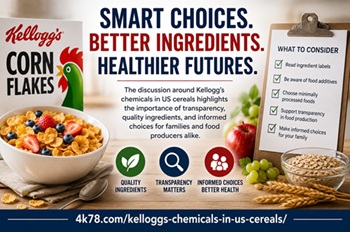
The conversation surrounding chemicals in US cereals highlights why consumers may want to pay closer attention to cereal ingredients, food additives, and the products they bring into their homes. While the concerns surrounding cereal ingredients extend far beyond one company, they also point to the importance of reading labels, asking questions, and understanding how processed foods are formulated. Greater awareness can help families make food choices that better reflect their individual preferences and priorities.
For food producers, the discussion surrounding chemicals in cereals and chemicals in processed foods provides an opportunity to consider transparency, ingredients selection, and changing consumer expectations. The growing attention to food additives and chemicals shows that people want greater clarity about what is in the foods they purchase. By encouraging informed conversations about ingredients and responsible food production, consumers and producers alike can contribute to a food environment where quality, transparency, and informed choices matter.
Topics Covered: Kellogg’s chemicals in US cereals • Kellogg’s cereal ingredients • chemicals in cereal • chemicals in processed foods • food additives and chemicals
Related Topics:
- Biohacking Health Solutions for A Smarter, Healthier, More Vibrant Life, Brain, Gut, Sleep, and Vitality
- Excessive Consumption of Sugar Is Bad For You, Understanding the Harmful Effects of Sugar on the Body
- Fix Your Health From Seed Oils and Sugar
- Processed Foods, the Dangers and Harmful Effects on Your Health
- Seed Oils Are Bad For You
Brought to you by: 4k78.com – A Treasure Trove of Incredible Online Finds